
Learn More

 
Skip to main content
Koch Agronomic Services Logo
SolutionsKnowledge CenterAboutRetailers & Reps
Labels / SDS
Contact
Labels / SDS
Contact
US
USCAINT
Map of the World

Find a Rep or Retailer

With our network of knowledgeable representatives, retailers and distributors, you can be confident you will get the best solution for your unique needs. Find your nearest Koch Agronomic Services, LLC, representative.

 
Contact Us
Find a Rep or Retailer

Connect with Koch Agronomic Services

Facebook IconLinkdein IconTwitter IconYouTube Icon
Koch logo

Solutions

AGROTAIN™PHOSFORCE™WOLF TRAX™PROTIVATE™ANVOL™OPTRIENT™CENTURO™SUPERU™
Knowledge CenterPodcastsResearch & ReportsArticlesProduct Labels/SDSs
AboutPress ReleasesCareers
Retailers & RepsFind a Rep or Retailerpage links
US
USCAINT
Koch Logo

Privacy Policy · Do Not Sell or Share My Personal Information · California Supply Chain Transparency · Modern Slavery Statement · Terms of Use · Patent Information

AGROTAIN™, the AGROTAIN logo, ANVOL™, the ANVOL logo, CENTURO™, the CENTURO logo, ARMOUR™, the ARMOUR logo, OPTRIENT™, the OPTRIENT logo, N-TEGRATION™, the N-TEGRATION logo, SUPERU™, and the SUPERU logo, TRIBUNE™, the TRIBUNE logo, SYNTHOS™, the SYNTHOS logo, NUTRICARE™, the NUTRICARE logo, WOLF TRAX™, the WOLF TRAX logo, PROTIVATE™, the PROTIVATE logo, 3-TRAX™, DDP™, CROP MIX™, NU-TRAX™ and EVENCOAT™ are trademarks of Koch Agronomic Services, LLC. Koch, the Koch logo and Principle Based Management™ are trademarks of Koch IP Holdings, LLC. © 2026 Koch Agronomic Services, LLC. All Rights Reserved.

1. EPA EEF Challenge Submission data: 30% reduction - corn (Chatterjee et al, 2016); 34% reduction - corn (Chatterjee et al, 2016); 45% reduction - corn (Yang et al, 2016); 35% reduction - corn (Eagle et al, 2017); 48% reduction - irrigated no-till corn (Halvorson et al, 2010); 53% reduction - semi-arid irrigated corn (Dugan et al, 2017); 43.8% reduction - sandy loam soil (Awale and Chatterjee, 2017).

The data and material contained herein are provided for informational purposes only. No warranty, express or implied, is made including, but not limited to, implied warranties of merchantability and fitness for a particular purpose, which are specifically excluded. Results may vary based on a number of factors, including environmental conditions. Before use, consult the product packaging and labeling for information regarding the product's characteristics, uses, safety, efficacy, hazards and health effects.

Not all products may be available in your jurisdiction.

CENTURO is not registered for sale or use in all jurisdictions. In the United States, contact your state pesticide regulatory agency to determine if a product is registered for sale or use in your state. Results may vary based on a number of factors, including environmental conditions. Improvements in nutrient use efficiency, yield and nitrate leaching may not be observed in all cases.

PROTIVATE NU5-LUX is not available for sale, use or distribution in California.
image
 

Latest Resources

Two growersArticleThe truth about UAN loss: Why stabilization matters more than you thinkPlanter box seed treatementArticleAgronomy Q&A: Understanding PROTIVATE™ and Its Role in Crop SuccessNutrientsArticleFueling the Foundation for Early Crop GrowthcornArticleGrower and Retailer Perspectives on Early Crop Success with PROTIVATE™ Corn side-by-side timelaspeArticleSee the PROTIVATE™ Advantage in Action

December 11, 2025

How Chelation Improves Foliar Micronutrient Applications

Micronutrients play a crucial role in plant health and development. These elements contribute to the plant's structure, aid in nutrient absorption and facilitate key enzymatic processes. Each micronutrient has its own agronomic function, but they all share the need to be readily available to the plant at the right time.

“An issue that many micronutrient products face is plant incompatibility,” said Kurt Gabrielson, vice president of research and development for Koch Agronomic Services (KAS). “Many micronutrients are metal cations with a positively charged ion, so they tend to get fixed in the soil. Once applied, they become tied up with other minerals, making them inaccessible to the plant.”

A solution to this problem is to chelate these micronutrient products, making them water-soluble and readily accessible for the plant to absorb in a foliar application. This process is key to gaining agronomic advantages in a variety of crops.

How chelation works as a protective shield 

A chelating agent, like ethylenediaminetetraacetic acid (EDTA), works by bonding to a metal micronutrient ion in at least two places, forming a protective, cage-like structure. This “cage” shields the nutrient from other interactions in the soil and neutralizes its electrical charge, preventing it from becoming tied up and unavailable. As a result, the protected nutrient remains water-soluble and is more easily absorbed by the plant.

Improving operational efficiency

Aside from the agronomic wins, a major consideration is the operational benefit of having chelated micronutrients in a formulation.

Because micronutrients are charged molecules, they tend to coordinate with surface-active agents and other formulations in a tank mix, causing precipitation that can slow down an application. 

In foliar applications, molybdenum (Mo) and nickel (Ni) are two micronutrients in particular that tend to be incompatible in non-chelated forms, causing inefficiencies. Neutralizing the charged atom into a neutral and water-soluble complex improves tank mix compatibility and, in turn, operational efficiencies. 

“Nickel and molybdenum will react to form an insoluble complex if the nickel source is not chelated prior to mixing with molybdenum,” Gabrielson states. “Having nickel chelated in the formulation allows for broad tank mix compatibility, ensuring ease of use for the grower.”

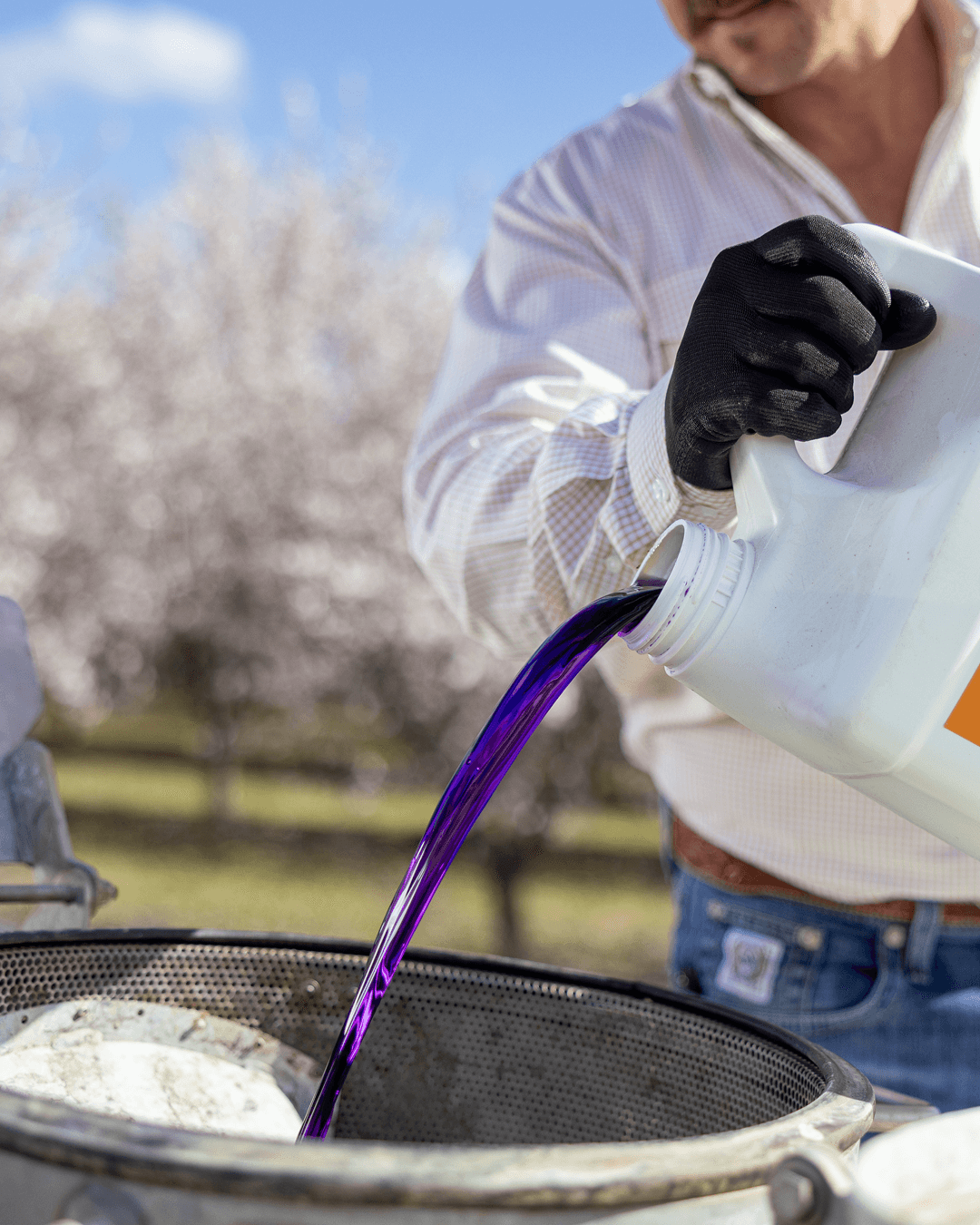
OPTRIENT MoCo-Ni is a liquid foliar spray containing molybdenum (Mo) and chelated cobalt (Co) and nickel (Ni), providing growers a product that can be poured directly into a tank mix.

“We still recommend jar tests as a best practice, since you can’t account for every variable in the field,” said Gabrielson. “However, our chelated products have shown outstanding tank mix compatibility, allowing for smoother applications and fewer issues during mixing.”

Benefits for a wider variety of crops

Nut tree growers have used OPTRIENT foliar nutrients to improve flower retention and overall tree health. Now, the same core benefits of this technology are being applied to a wider variety of row crops, including cotton, sugar beets and peanuts. For these crops, the chelated nutrients in OPTRIENT MoCo-Ni enhance nitrogen utilization, supporting better plant health and optimizing yield potential.

Learn more about the advantages of OPTRIENT MoCo-Ni™

As a ready-to-use formulation, OPTRIENT MoCo-Ni delivers a targeted application of molybdenum, cobalt and nickel when and where crops need them most. Learn more about the advantages of OPTRIENT in row crops and how this technology optimizes your crop’s performance.

Resource Categories
ArticleSoybeansSpecialty CropOPTRIENT